


We’ve been tracking Australian fuel prices and the fuel card market for years. And right now, we’re watching something that we haven’t seen in a long time: a genuine, sustained fuel price shock that is hitting businesses across every sector.
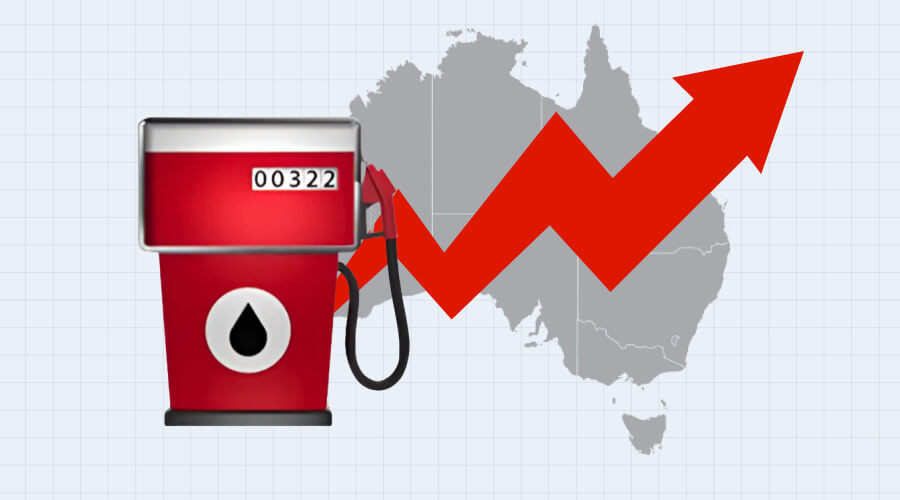
The national average for unleaded has surpassed $1.98 per litre. Diesel – the lifeblood of Australia’s freight, construction, and trades industries – is touching $2.50 per litre in some cities. These are not temporary blips. The structural causes are deep, and the businesses that are going to come out ahead are the ones that treat this as a strategic challenge, not just a cost to absorb.
We’re here to help, so we’ve laid out a four-layer framework for managing fuel costs in a high-price environment. A fuel card is central to all four layers — but the way you use it matters enormously.
Enquire to save

Understanding the Problem: Why Prices Are This High
Before we talk about solutions, it’s worth understanding what’s actually driving prices. Because the answer shapes how we think about the timeline and the appropriate response.
Australia imports approximately 90% of its refined liquid fuel. We are a price-taker, not a price-setter. When global crude oil prices move, our pump prices follow, typically with a lag of a few weeks.
The current spike has two primary causes:
- Middle East conflict and the Strait of Hormuz. The escalating conflict has brought shipping through the Strait of Hormuz — the only sea passage from the Persian Gulf to the open ocean — to a near standstill. This has driven global crude oil prices up by approximately 10%, with analysts warning of a further 40 cents per litre increase at Australian pumps .
- Demand-side pressure. Global fuel demand remains strong. There is no slack in the system to absorb a supply shock of this magnitude.
Australia’s emergency strategic fuel reserve, while at its highest level in 15 years, covers only an estimated 34 days of diesel consumption . The ACCC is monitoring for price gouging, but it has no power to override market-driven increases.
Our assessment: Prices are unlikely to fall meaningfully until the Middle East situation stabilises. The government’s domestic gas reservation policy, which could provide some structural protection, does not take effect until 2027. Businesses should plan for elevated prices through at least the first half of 2026.
The Four-Layer Fuel Cost Management Framework
We’d advise businesses to think about fuel cost management in four distinct layers. Each layer builds on the last, and together they create a comprehensive defence against rising prices.
Layer 1: Lock In Pump Price Savings
The most immediate and tangible benefit of a fuel card is the cents-per-litre discount at the pump. This is not a rebate or a cashback that arrives weeks later — it is an automatic reduction to the price you pay, on every litre, every time.
The current promotional landscape is particularly strong. Several providers are competing aggressively for new business, offering elevated introductory discounts and waived card fees. Here is our current data:
| Fuel Card | Promo Discount (c/L) | Ongoing Discount (c/L) | Promo Card Fee | Ongoing Card Fee | Network |
|---|---|---|---|---|---|
| Shell Card ⭐ | 6c | 2c–4c | $0 (6 months) | $2.50/card | 1,500+ Shell & Coles Express |
| WEX Motorpass ⭐ | 5c | 1c | $0 (6 months) | $5.99/card | 6,000+ multi-brand |
| FleetCard | 6c (Shell) / 3c (7-Eleven) | 3c (Shell) / 1c (7-Eleven) | $2.99/card (6 months) | $5.99/card | 6,200+ (90% of AU) |
| AmpolCard | 8c | 2c–4c | NA | $2.95/card | 2,000+ Ampol & EG Ampol |
| BP Plus | N/A | 2c–3c | N/A | $2.95/card | 1,400+ BP |
| 7-Eleven Fuel Card | 10c | 3c | NA | $0.00/card | 640+ 7-Eleven |
| StarCard (Caltex) | 6c–8c | 4c–7c | $0/card | $2.50/card | 550+ Caltex + 6,000 WEX |
| United Card | 5c | 4c | N/A | $2.95–$4.95/card | 500+ United |
⭐ Recommended providers. Data last updated January 2026. Always verify current offers directly with the provider.
A note on promotional periods: The promo discount is typically available for a defined period (commonly six months) from account activation. After that, the ongoing rate applies. When evaluating cards, we recommend calculating your total first-year savings across both the promo and post-promo periods, not just the headline promo rate.
Our recommendation: For most Australian businesses, the Shell Card and WEX Motorpass represent the strongest combination of promotional value, ongoing savings, and network coverage. Shell’s Flybuys integration adds a loyalty dimension that compounds the pump savings. WEX’s 6,000+ location network is unmatched for mixed or regional fleets.
Layer 2: Streamline Tax, GST, and Compliance
This is the layer that most businesses underestimate — and it’s where some of the most significant financial benefits lie.
GST Input Tax Credits
Every GST-registered business can claim back the GST component of fuel purchases as an input tax credit on their BAS. For a business spending $50,000 per year on fuel, that’s approximately $4,545 in GST credits available to claim. But to claim it accurately, you need records.
Without a fuel card, this means collecting and reconciling individual receipts from every driver, every fill-up. With a fuel card, you receive a single, consolidated, ATO-compliant invoice that itemises every transaction, including the GST component. Your BAS preparation becomes a matter of minutes, not hours.
Fuel Tax Credits (FTCs)
For businesses using fuel in heavy vehicles (over 4.5 tonnes GVM), off-road machinery, or certain other qualifying activities, the ATO’s Fuel Tax Credits scheme provides a cash refund of the fuel excise component of the price you paid. As of 2026, the rate for eligible off-road use is approximately 48.8 cents per litre — a substantial rebate for qualifying businesses.
To claim FTCs, you need accurate records of the volume of fuel used in qualifying activities. A fuel card provides exactly this, with transaction-level detail that makes FTC calculations straightforward and defensible in the event of an ATO review.
The Time Cost of Manual Administration
Let’s put a number on the admin savings. For a fleet of 10 vehicles, with each driver filling up twice a week, that’s approximately 80–100 fuel transactions per month. If each transaction takes 3 minutes to process manually (finding the receipt, entering the data, reconciling), that’s 4–5 hours of admin time per month — or roughly 50–60 hours per year.
At an average admin rate of $40 per hour, that’s $2,000–$2,400 per year in labour costs that a fuel card eliminates. For many small businesses, this saving alone justifies the card fees.
Layer 3: Eliminate Fraud and Unauthorised Spending
Fuel fraud is a hidden cost that many businesses don’t track — and therefore don’t know they have. Research suggests that fuel misuse is one of the most common forms of employee theft in fleet-dependent businesses, ranging from filling personal vehicles to purchasing non-fuel items to more sophisticated schemes.
A fuel card does not just make it easier to detect fraud after the fact. It makes most forms of fraud structurally impossible from the outset.
Here are the controls we recommend implementing immediately upon activating any fuel card:
Product restrictions. Set each card to “fuel only” and, where possible, to the correct fuel type for the vehicle (e.g., diesel only for a diesel truck). This prevents any non-fuel purchases and eliminates the risk of premium fuel misuse.
Volume and spend limits. Set a daily or weekly litre or dollar limit based on the vehicle’s tank size and typical usage pattern. A card assigned to a small ute does not need a 200-litre daily limit. Tighter limits make unusual patterns immediately visible.
Time-of-day restrictions. For businesses with defined operating hours, restricting card use to those hours means that any out-of-hours transaction is automatically flagged — or simply declined.
Driver-to-card assignment. Assign each card to a specific named driver or vehicle, not to a pool. This creates a complete audit trail and makes it easy to identify the source of any anomalous transaction.
Regular reporting reviews. Set up automated weekly or monthly reports and review them. Look for transactions at unusual times, locations significantly off normal routes, or volumes that don’t match the vehicle’s tank size.
The Shell Card and WEX Motorpass both offer comprehensive online portals with these controls. Shell Card is particularly strong for businesses that need granular, per-vehicle reporting as well as smart alerts you can set to find out instantly when something’s amiss.
Layer 4: Use Data to Drive Long-Term Efficiency
The most advanced — and most underutilised — benefit of a fuel card is the data it generates. Every transaction creates a record: the date, time, location, driver, vehicle, fuel type, volume, and price. Over time, this dataset becomes a powerful tool for strategic decision-making.
Identify inefficient vehicles. If one vehicle in your fleet consistently uses significantly more fuel per kilometre than comparable vehicles, that’s a signal. It might need a service, a tyre check, or it might be time to replace it. Without fuel card data, you’d never know.
Optimise refuelling routes. If your drivers are regularly filling up at stations that don’t offer your card’s discount, you’re leaving money on the table. Fuel card data lets you identify these patterns and adjust routes or refuelling habits accordingly.
Benchmark and negotiate. As your fuel spend history grows, you have data to support conversations with your fuel card provider about better rates. High-volume customers often have more negotiating power than they realise.
Budget accurately. With detailed historical data, you can forecast your fuel spend with much greater accuracy, which improves your cash flow management and financial planning.
Putting It All Together: The Annual Savings Picture
To illustrate the combined impact of all four layers, consider a hypothetical business: a plumbing business with 8 vehicles, each consuming approximately 150 litres per week.
| Saving Category | Annual Estimate |
|---|---|
| Pump discount (Shell Card, avg. 3c/L blended) | ~$2,808 |
| GST input tax credits (correctly claimed) | ~$5,455 |
| Admin time saved (50 hrs @ $40/hr) | ~$2,000 |
| Fraud/misuse prevention (conservative estimate) | ~$1,500 |
| Total estimated annual benefit | ~$11,763 |
This is a simplified illustration. Actual savings will vary based on fleet size, fuel consumption, card choice, and business circumstances.
Enquire to save
Frequently Asked Questions
Why are fuel prices so high in Australia in 2026?
Australia imports approximately 90% of its refined fuel, making pump prices directly sensitive to global crude oil prices. The current spike is driven by the Middle East conflict disrupting the Strait of Hormuz, combined with strong global demand. The ACCC is monitoring the market but cannot override normal market-driven price increases.
When will fuel prices go down in Australia?
There is no reliable timeline. Analysts suggest prices will remain elevated through at least the first half of 2026. Any meaningful relief depends on a resolution of the Middle East conflict and a stabilisation of global supply chains. We recommend planning for elevated prices and focusing on what you can control: your fuel card strategy.
What is the difference between a fuel discount and a fuel rebate?
A fuel discount is applied at the point of sale — you pay less per litre at the pump, immediately. A rebate is a payment made after the fact, typically monthly, based on your total spend. Most fuel cards in Australia offer pump discounts rather than rebates, which is better for cash flow.
Is there a risk that fuel card fees will eat into my savings?
This is a legitimate concern, and it’s why we always recommend calculating your net savings — discounts minus fees — rather than just looking at the headline discount rate. For most businesses with regular fuel spend, the pump savings significantly outweigh the card fees.
What controls can I put on a fuel card to prevent misuse?
Most business fuel cards allow you to restrict purchases to fuel only, set daily or weekly spend limits, limit usage to specific fuel types, restrict transactions to business hours, and assign cards to specific drivers or vehicles. These controls are typically managed through an online portal and can be adjusted at any time.
Which fuel card has the best network coverage in Australia?
The WEX Motorpass and FleetCard both offer access to over 6,000 locations, covering approximately 90% of all fuel stations in Australia. These are the strongest choices for fleets that travel across multiple states or regions.
Can I use a fuel card if I’m a sole trader or have just one vehicle?
Yes. There is no minimum fleet size for most fuel cards. A sole trader with a single vehicle can still benefit from pump discounts, simplified GST reporting, and fraud protection. Shell Card is a popular choices for smaller operators.
Our Conclusion
Rising fuel prices are a genuine challenge for Australian businesses in 2026. But they are not an insurmountable one. The businesses that respond strategically — locking in pump discounts, streamlining their tax and admin processes, eliminating fraud, and using their fuel data intelligently — will not only survive this period but emerge with leaner, more efficient operations.
A fuel card is the foundation of that strategy. And right now, with providers offering some of the most competitive promotional deals we’ve seen in years, there has never been a better time to act.
Enquire to save
Fuel Card Report is an independent information and comparison service for Australian businesses. We do not represent any single fuel card provider. Our editorial content is based on our own research and analysis.